Wednesday, July 29, 2009

Possible Paper: Anxieties of the American Road


So I'm one of those freaks who considers researching and writing academic papers during the summer months when I'm supposed to be drinking some beer, swimming in lakes and scoping all the bikini clad girls from behind my shades and sun-blocked nose. However, I have the urge (yes, an urge) to write an academic paper; this is especially a good idea because when I apply for Grad School in a few months I'll need a "sample" of my critical writing between 10-12 pages. Hopefully this sample will be somewhat like the little spoonful of ice cream they give you free at Cold Stone so you'll buy some; I want my paper to say to various Grad. schools "mmmm.... I'm good ice cream. Buy me." However before I get over zealous about the Grad school hunt I should explain the basis for said paper.

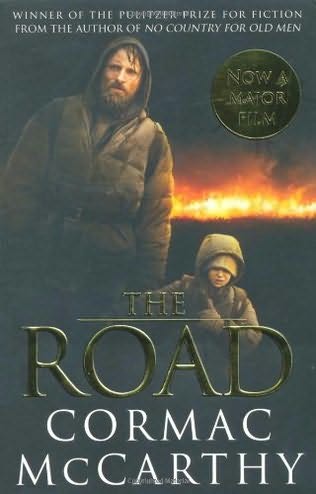
This summer I've been reading a lot of different things-- mainly Franz Kafka and Italo Calvino. However, I also read The Road by Cormac McCarthy at the very beginning of the summer. After reading The Road and some of Kafka's novels, especially Amerika, I saw some possibility for a comparative literature piece despite how much I actually despise writing comparative literature pieces. You see, both The Road and Amerika come from some of the same raw materials. Each novel recounts the experiences of traveling through the country and trying to 'make your way' in America and each captures the anxiety of this burden. Kafka and McCarthy both construct the anxiety of their characters, Karl Rossmann in Amerika and the unnamed father & son in The Road, by juxtaposing the hopes, dreams and fantasies of what America could and should be with the America that they are actually experiencing.
The anxiety the two authors depict also are chronologically spread wide apart on the stages of these "imagined Americas". To research for Amerika, Kafka attended lectures that were being held on the budding country. Sometimes, his notions of America are completely intriguing because of the falsity of their assertions, although they can be based on completely real fact. An example is when Rossmann lands in America and sees the statue of liberty with the sword in her hand. As we all know, the statue of liberty has a torch but this imagined sword gives an interesting interpretation of nature of this new country for the immagrant to explore.

Likewise, The Road also is composed based on the imaginings of a largely imagined America. The landscape is bleak and gray as the result of some unnamed tragedy. Most of the population is gone and those that survived are struggling individuals or brutal bands of junkyard militia's with makeshift swords and clubs. There is no way to judge The Road in terms of falsity or truth because it is set presumably sometime in the future, but that too is unaccounted for, leaving the reader in an America overcome by a vertigo of whereabouts, lost, disoriented and anxious.

One could say that Kafka's Amerika captures the pre-apocalyptic rise of America while The Road captures the post-apocalyptic fall of America. These two novels represent similar perspectives of the American journey at diametrically opposed ends of the spectrum-- rise and fall. What we find though, is that this anxiety of being in America with the expectations of what that means dominates the characters and defines their journey. Both Rossmann and the father & son are striving to become what they perceive as a true American ideal; Rossmann by assimilating himself into this new land and the father & son by continuing the American legacy.

Despite their positions at opposing ends of the scale The Road does serve to provide a possible segway into a new rise, hinting at the end that perhaps 'the fire' will continue to burn and the long hoped for America, prophesied in the hopes of immigrants like Karl Rossmann, will become manifest again.

Possibly, although I have not read it yet, I would think that On the Road by Jack Kerouac could provide an interesting perspective of the Road narrative during a time of American opulence; a view from the peak of the climactic American experience after the rise of Kafka's Amerika and before the fall of McCarthy's The Road. I'm sure, although I have not read it.... yet, "On the Road" could illuminate some fascinating anxieties that come from the mind of the native-born and experienced American journeyman, a sharp contrast from both the immigrant Karl Rossmann and the immigrant-to-new-American-experience father/son duo.

Perhaps this topic for a paper is really worth pursuing and perhaps it is just an interesting study to look at superficially. However, it may come to fruition sometime in the next couple of months or it may wither shortly after this genesis but I'll be sure to keep you posted whatever comes about.

Saturday, July 25, 2009

Unread Books...


In Italo Calvino's If on a winter's night a traveler he provides a description of being in the bookstore and seeing all of the books that you pique your desire. He speaks about the books you've always wanted to read, books you've told people you've read but never have and feel like you finally should, books that you planned to read after you've read other books, and the plethora of other books that attract you. He then uses the rest of traveler to explore the infinite possibilities of novels and their effects on the lives of the reader. This got me thinking about making the decision and commitment to read a book.

Each time we choose to read, to pursue the direction of one story, we also are choosing not to pursue other stories. I believe that most people have said to themselves 'I have always wanted to read that book.' It seems that every time we have to make a decision about what book to read, there is always more than one option. Sometimes, for some readers, there may not be though. Having just read the first Harry Potter book and having the second one available allows a lot of people to indulge their insatiable desire to continue the story-- was there really any other option than pursuing the second book?

Although the techniques and interpretations of one book can possibly be infinite like a verbal cosmos we still allow ourselves to come completely immersed in one story, as if it is being written page by page in front of our eyes. We root for Jesus and think that just maybe Pontious Pilate is going to pardon him of any offense placed on his head. Perhaps Grendel and his mother might slay Beowulf and end his heroic journey. Is Frodo going to actually be able to destroy the ring? Pursuing one story is undertaking an endeavor, a commitment to follow the path and discover what is at it's end.

But what about all the unread books? If a reader reads one book how is he/she supposed to consider the book that he/she did not choose? Was the cover fairly boring? Did the reader consider the author a hack? Subject matter not interesting? Maybe Barnes and Noble didn't have the book you really wanted? This begs the question: to any given reader does a book exist until it has been read by that reader? To not read a book is partially to deny it existence. However, it can exist in the sense that you've heard about the book, maybe some friends discussed it over coffee, or a cute girl you know was telling you about it while you hung on every word like a trapeze swinger. But the unread book, approximately a 8" x 5" x 1" space given the work, can allow you a space to navigate so large that until you have read it the book will remain like distant places you know only by name and would love to explore through touch, taste, sound, and sight as you glimpse them through an airplane window.

Friday, July 24, 2009

Blurb: 'Marcovaldo' by Italo Calvino


Blurb: 'Marcovaldo' by Italo Calvino


Marcovaldo is an Italian man whose schemes and dreams penetrate every crevice of available space that his position as a poor worker with a large family in industrial Italy can allow him. Whether discovering a secret grove of delicious mushrooms in the drab of the city or conducting an experimental treatment of Rheumatism these dreams and schemes often come to fruition but with tragic and comic conclusions beyond Marcovaldo's (and anyone else he's involved) vision. Each new pursuit leaves the reader rooting for Marcovaldo to realize his often universally felt desires. Italo Calvino's tales of the inspired Italian Marcovaldo applies a sharp-edged realism to the hopes and desires of everday life yet pleases the reader with his unmatchable charm.

Lunch Special


"Lunch Special"

By: Adam Benson


Most people don’t understand the difference between a landfill and a dump. The landfill is the place where other people take your trash. The same people that use the word “landfill” probably refer to their garbage as “waste”, as if it has some glamorous purpose like it’s the unfortunate by-product of human progression that has to be dealt with—as long as it’s dealt with by other people. The dump is the place where you have to go and work in the stinking rot. People that say “dump” call it “garbage”, “shit”, or just “trash”.

I spent a couple days working out at a dump. We were stationed right before a fork in one of the dump roads, just to the left of a big partitioned sign. The top half had a big arrow pointing right and said Consumer Waste- Plastic and Household Trash. The bottom half had a big arrow pointing to the left and said Trees and Shrubs, Grass Clippings, Fill Dirt, and Dead Animal Pit. These dump signs are like inanimate airport ground controllers. They funnel things where they need to go. Without the signs old junk would all get mixed together and there would be chaos. Everything has a place. Without some sort of designation where to put your trash you won’t have effective waste management. Something has to direct this trash here and that trash there, so they put up signs. The St. Peter’s of old shit.

My job was to deal with old tires—the black remains of mass transportation. I ran a big compactor/baler that would smash tires and put them into bales. I stood on a metal-latticed platform that was about three feet long and seven feet wide. It was dented all over from years of abuse. My boss drove a skid steer and shuttled me fresh old tires from a black mountain that cast shadows the wrong way to get shade this time of day. He’d dump them next to me on the platform, occasionally crushing my feet, and make my small space even smaller. I’d have to bend over, pick up the tire, and toss it into the jaws of the compactor. Some tires would have the tread torn and it was like picking up big, floppy, dead bodies. The exposed wires would cut my arms up like hungry fireants. After I threw about five or six tires in, I’d press down on a lever and the compactor would slowly smash the tires to the bottom. Then I’d push up on the lever and the crusher would rise up as slowly as it crushed. When each bale was done, you’d unlatch the heavy door and leave it to be picked up. They’d pick up these big black bales with another skid steer and set them on top of each other like a black rubber haystack.

Every time we’d make a new bale, I would walk over to the side of the machine, take my gloves off, and scratch a tally into the grease and grime that coated the hazard-yellow baler. Underneath the black mess there was an overly patriotic image of an Eagle clutching the American Flag with the name of the company who manufactured the machine. Each new tally would reveal bits and pieces of the image. A wing. A talon. The flagpole. Some stars and stripes. Was I supposed to take my hat off every time I looked at it?

After we had twelve or so tallies on the side of the compacter we would shut off the machine. I would sit down on the platform with my feet on the ground for the first time in five hours. My boss would get out of the skid steer and go turn on his truck.
“Hey. Time for lunch” he said.
“Okay.”

We ate almost every meal at Maggie’s Cafe. In the mornings we would wake up at five-thirty and go to Maggie’s for breakfast. I was always the only person under the age of fifty and the only one that didn’t have a hat with the name of a pesticide on it. Lunch was pretty much the same. The same old farmers from breakfast. Sometimes some new people would come in. I would always hope that some clean blonde girl with big breasts would walk in. She would give me something to think about later.
A waitress would come over. She had curly brunette hair trapped up in a hairnet and a dirty white apron. It looked like she was probably in her fifties. It was hard to tell with the tired bags under her eyes.
“What can I get for ya’” she asked.
“I’m going to get the hamburger,” I told her.
“Wha’dya want on it?”
“Uh, just lettuce, tomatoes, and ketchup please.” I wondered if this was Maggie or just some waitress.
“Sure hon,” she said as she scribbled down my order on a notepad. “What about you?” she asked my boss.
“I’ll have the half-special.”
“Alright. One hamburger—lettuce tomatoes and ketchup, and one half-special” she said looking at my boss.
“Sounds fine,” my boss told her. She walked back towards the kitchen. My boss watched her until she was out of reach and then lurched forward onto his palms.
“Why didn’t you get the special?”
“Huh? I didn’t want the special. I wanted a hamburger.”
“Yeah well, when you come to a place like this you always get the special. There's good reasons to get the special.”
“I wanted a hamburger.”
“See Adam, if you get the special they have it all ready in the back and you can get it quick. If we get our food quick, we can get back to work quick. It’s even better to get the half-special because you get more than half the food for half the price.”

We ate. My boss paid the ticket and left some paper and coins on the table. I slid back into his truck and he drove us back out to the dump. I rolled down my window and stuck my face out to avoid listening to Rush Limbaugh. The hot air felt pretty good on my face. Sometimes I had to keep my eyes shut from the dust that passing dump trucks would kick-up. The sagebrush out there looked real tough like old men who don’t give a damn what you think and aren’t afraid to tell you so.

I turned the machine back on and cringed at the deafening mechanical sound. I got back on the platform, threw some tires into the compactor, and laid weight onto the lever. The big hydraulic presser inched down, bending tires and flattening them against the bottom. I stuck my head over the edge where the safety gate was supposed to be closed. Clouds of dust and grime sprayed out. You’re never supposed to watch it crush. Sometimes an inflated tube gets left in the tire and it explodes up into your face. The burst throws flak of dump up into your eyes like shrapnel from a grenade you were standing over. You have stop working for a moment trying to figure out if your blind or not and your boss starts yelling to get back to work. You don’t hear him over the ringing in your ears. You stand there, deaf and blind, when your mind starts to wander. You start thinking about lunch at Maggie’s. You think about the tired waitress and the old men with pesticide hats. You think about that girl you saw in her summer shorts and that hamburger with lettuce and tomatoes and ketchup you ate for lunch— goddamn that was a good hamburger.
I stared down deep into that black mass of tires writhing and twisting under the hydraulic compactor. The tires began to wheeze in dying breaths and the rusty wheels cracked like old bones. Dust poured into my nostrils and lungs, drowning in a vast ocean of dry particles where your feet don’t touch bottom. And yet, I stood staring down through each clogged breath, like an astronomer gazing out over the whole universe, willing to sacrifice it all for a chance to have a revelation, an epiphany, to feel the big bang and see the world as you never have seen it before or feel like you will never see it again. My gaze was in a black hole where everything is trapped and light struggles like tied in stiff ropes. Time is so bent and misshapen that the moment is a portrait, a masterpiece, hanging from a nail and an old rusted wire on an unpainted wall in the living room for everyone to see.
And then there is no explosion and it is all over.

Fastball


"Fastball"

By: Adam Benson


When I was fourteen I stood on a hill of bare earth and looked down over the rest of the world. I stood on this mound framed in lights like those that illuminate paintings in the galleries and people from all around would squint and shade their eyes like staring at the sun. Like a long prophesied messiah, come down and freshly glistening, they watched me, hoping to revive the dormant spring like the first glimpse of green grass through patches of melting snow. Their eyes groped for me in the center of a kaleidoscope of black cast shadows.
Some appeared to be more affected than others. While the women munched on hot-butter popcorn and chatted amongst themselves the fathers and grandfathers all sat still in their bleacher seats. Looking out over the groomed infield dirt and the freshly cut outfield grass made them feel old. They remembered when they were boys and sweat fell from the brim of their caps onto the grass. They remembered pounding their fists into the pockets of their leather mitts and shouting at their friends, “c’mon! Throw it in there, throw it in there!” How long ago that was the dormant spring of boyhood. Now they sat hunched over in the bleachers, elbows resting on their old knees ready to fall into the seat in front of them as if trying to plunge through the chainlink fence back onto the field. Their hands clenched and eyes shifted to the invisible line between the mound and the plate. Each waiting for the moment when I would swing my arm like a workman’s hammer and build a memorial more impressive than any of them had seen before. Some remembered standing up on that mound of bare earth, surrounded by lights under the eyes of their fathers and looking down over the rest of the world.
I pulled the ball out of my mitt and reached far back behind my shoulder. I looked down the invisible rope that led into the catchers mitt. When the ball left my callous fingertips it would glide down that line like the fine fibers of a bow across the strings of a cello— the listener anticipating warm, deep reverberations in their chest. My arm came forward. The multitude leaned forward and sucked in its breath waiting to hear the ball pop into warm leather surrounded by the buzzing of fireflies and humming of trees on a cool June night.

Wednesday, July 22, 2009

My favorite author???


Having just read a lot of Italo Calvino, I'm pretty comfortable saying that I believe I would consider him my favorite author. I've been entranced by his blissful use of dream, meta-commentary, parable, and other devices he employs. Simply put, his stories are so inventive and fresh that I'm instantly attracted to their charm and at times find them impossible to put down. I can't help but deny And I'm excited that he has so many things published that I will be able to read... right now it's "Marcovaldo" and then it's on to "The Non-Existent Knight, and The Cloven Viscount". Ahhh.... it's been a good summer of reading.